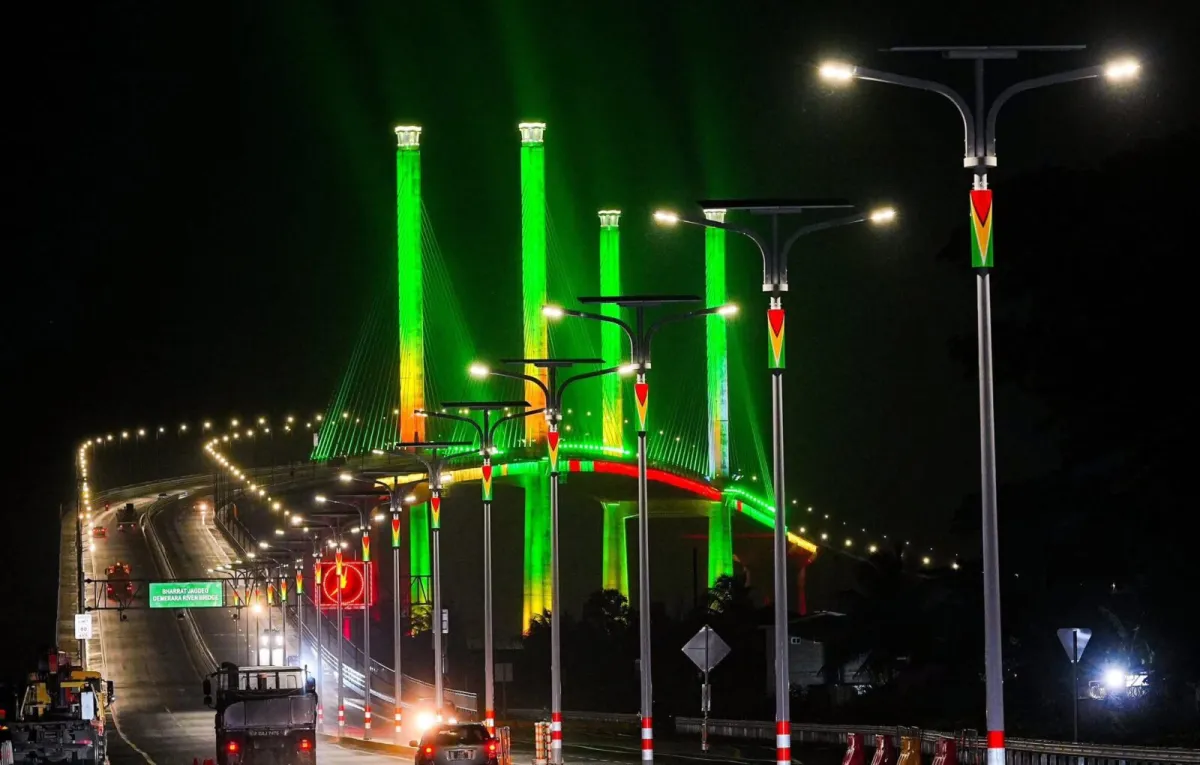
The new Bharrat Jagdeo River Bridge across the Demerara River, a four-lane bridge, has offered greater convenience and predictability for thousands of people travelling between Regions Three and Four. For years commuters on that route faced lengthy queues, particularly during peak periods, with many leaving home hours earlier to avoid congestion.
Across the country, mud dams have been converted to rigid pavement concrete roads and footpaths, and deteriorated community roads have been upgraded. The Ogle-to-Eccles Road, the Mandela-to-Eccles Highway, the Eccles-to-Great Diamond Highway (Heroes Highway) and the Schoonord-to-Crane four-lane highway are among the projects referenced. Those projects have significantly eased traffic congestion, improved connectivity and reduced travel times. Bus and taxi drivers, passengers, truck operators, students, farmers and businesses depend heavily on the expanding network to move more efficiently.
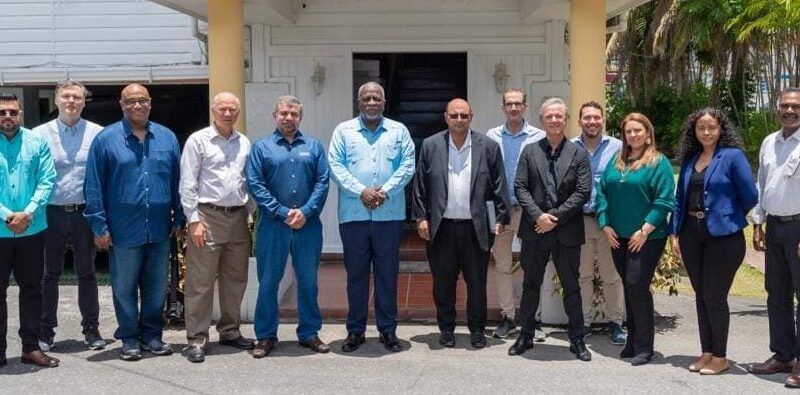
Minister of Public Works Bishop Juan Edghill said the scale of the government’s infrastructure programme during the first year of its second term transcends what was imagined. He said the government has made interventions in every village and region and delivered development without discrimination. Edghill said the impact of infrastructure should not be measured solely by cost or size of projects. “Everything cannot be counted just in dollars and cents and kilometres of road or width of drains, but it’s how people’s lives are better, better drainage, better irrigation, better roads, better access. And for me, it’s the way we serve people.”
Before the bridge’s completion, Region Three resident Frank Watson described the project as an important development for commuters. He said, “The four-lane bridge is one of the best highways that [is] coming to this country because the harbour bridge right now affects a lot of people.” Watson said a four-lane bridge with no retraction would let people go back and forth as they like. University student Cianna Johnson said travelling by boat had sometimes been easier due to congestion experienced by commuters. Simone Britton, a public servant from Zeelugt, said traffic influenced her decision on whether to purchase a vehicle. She said the bridge will benefit the people of Region Three, reduce congestion, make it easier to get to Georgetown and to get to work on time, and that she will get a car and drive straight to work when the bridge comes. The bridge has become a space for recreation and exercise, with Guyanese using it for walking and running.
The Demerara River Bridge is part of a wider infrastructure plan to link roads, bridges and ports into an integrated national transport network. In the east, the Palmyra-to-Moleson Creek corridor is expected to eventually connect with a planned bridge across the Corentyne River between Guyana and Suriname. The government is advancing plans for a new four-lane bridge across the Berbice River to accommodate increasing traffic and support movement of commercial goods. Edghill said the Palmyra to Moleson Creek Road is to be linked to the bridge across the Corentyne River, which is to be built between Guyana and Suriname. He said people will get over the Berbice River on four lanes rather than a two-lane floating bridge because of traffic volume. No date was given for the Corentyne River crossing or the new Berbice River bridge.