

Who gets second slate in the small parties?
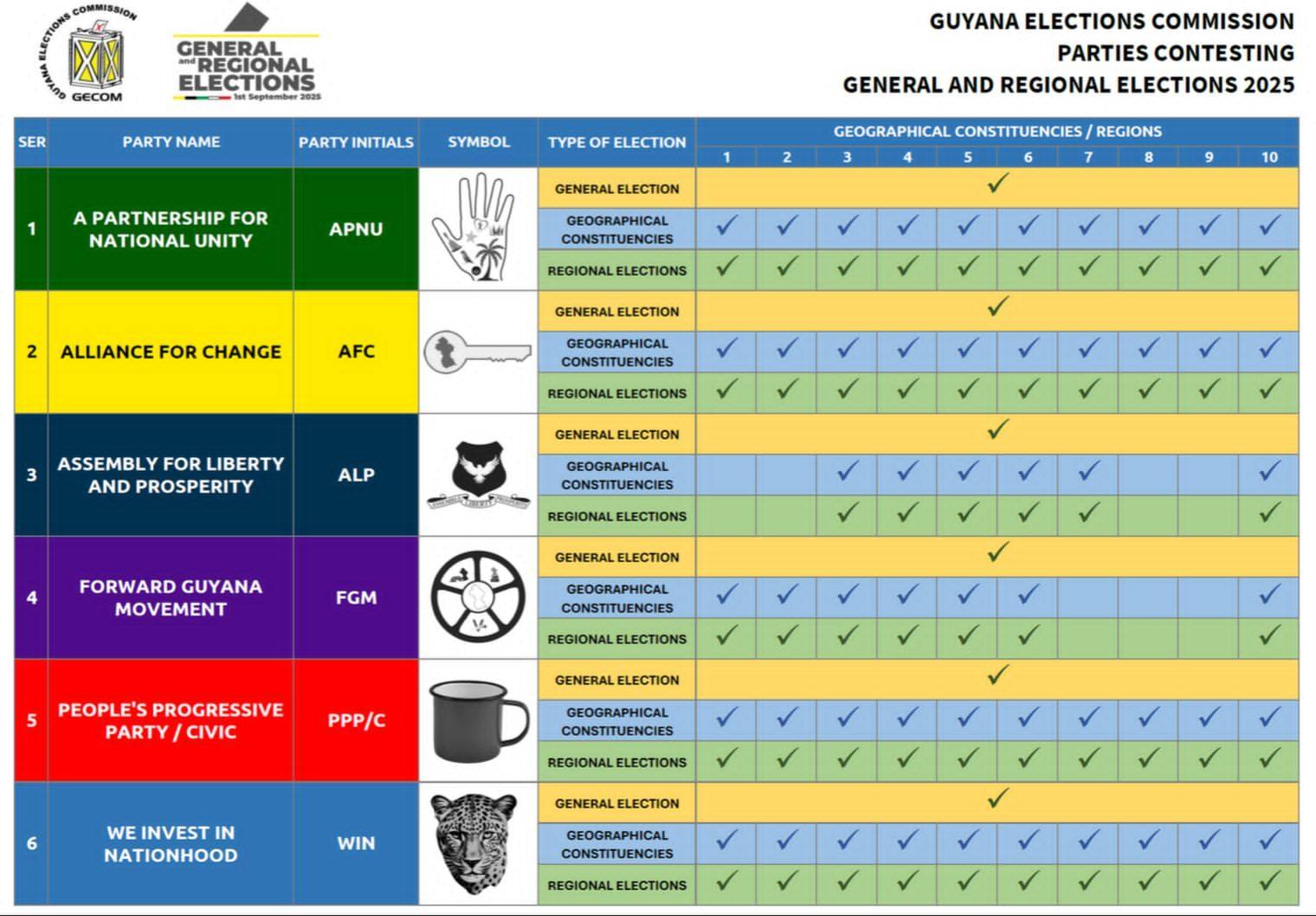
Today, the political parties that will be contesting the General and Regional elections. As we have explained, the General elections will determine who is vying for the Presidency as the Head of the List for each party. While traditionally parties indicate who their Presidential Candidate has selected as their Prime Minister if elected, there is no Constitutional requirement for a PM candidate to be indicated on the list of candidates.
Considering Guyana’s primary Afro-Indo ethnic divide, the two main parties for the past several cycles have always sought to put forward a formula wherein the Presidential Candidate reflects the base of the particular party and the Prime Minister designate reflects the base of the opposing party.
If we start in 2011, there was the Donald Ramotar-Sam Hinds ticket for the PPP, while there was the David Granger-Rupert Roopnaraine ticket for the APNU; the emerging AFC for its part had the Khemraj Ramjattan-Raphael Trotman campaign, a reversal of roles from the previous 2006 campaign, a nod to the AFC’s courting of a multiracial base.
In 2015, the Ramotar re-election bid saw him pairing up with senior diplomat, Elisabeth Harper while the APNU+AFC merger into a coalition produced the David Granger-Moses Nagamootoo campaign that would go on to win the elections. In 2020, Granger switched out Nagamootoo to have Ramjattan as his running mate, while for the PPP, Irfaan Ali teamed up with Mark Phillips. In Ali’s re-election bid, Phillips is once more his PM designate. The APNU now under the leadership and Presidential Candidacy of Aubrey Norton for the first time in the core PNC’s history has done two things to the formula – there is an Amerindian, not Indian, PM designate, Juretha Fernandes, the first time a woman in on the PNC slate. (Next week we will take a look at women candidates in the Presidential-PM tickets). This is an indication that Norton, who has been struggling with diversity issues, has shifted primary focus to the Amerindian vote although he has given theatrical nod to the Indian vote by ‘designating’ PNC executive Ganesh Mahipaul as ‘Vice President’.
Which brings us to the small parties and what, considering the optics of inclusion that the larger players put stock in, their challenge is in choosing their respective candidates. We can start with the AFC, which for the first time in 10 years has been forced back into non-coalition politics. When Nigel Hughes emerged as leader of the party last year, the belief was that he would revive the AFC’s decline and that he had both a strong influence over the Afro middle class as well as crossover appeal to the Indo community, the middle class in particular. The year that followed put some considerable question to that. Not only has he failed in what was an effective takeover bid of Norton’s PNC but his party has been haemorrhaging young and senior members at an unprecedented rate in Guyanese political history. Norton’s PM designate, Fernandes, is one of the several defectors from the Hughes AFC. Launching his open political ambitions with a questionable message from his “ancestors”, Hughes has been openly playing up his Afro credentials, going as far as sponsoring, under the aegis of his law firm, a visit and lecture by Dutch scholar, Marjoleine Kars, author of Blood on the River: A Chronicle of Mutiny and Freedom, a book on the 1763 Berbice Slave Rebellion, during Emancipation Month last year. His annus horribilis (there are two ’n’s in that word, get your mind out of the gutter) saw him ‘strategically’ courting the increasingly heavy Amerindian vote, first with his Hinterland outhouse census tour, and then the awkward grafting of Amerindian Peoples Association (APA) official Laura George on to the AFC political infrastructure, but losing his most prominent Amerindian political figure, and potential PM designate, Fernandes, to Norton. Asked by the media last week whether he has selected his PM designate, Hughes retreated into his usual evasive deflection claiming that his focus was on a team of people, not individuals. Still, in keeping with his bizarre attitude strategy of outsourcing key political decisions and tasks, his party’s Facebook page has twice in the past week posted a Survey Monkey poll asking participants to “Who should be the AFC Prime Minister Candidate?” The current choices include George, Dianna Rajcumar, David Patterson, Khemraj Ramjattan, and Jaipaul Sharma. It should be noted that in this second iteration of the poll, Sharma – who represented his father’s Justice For All Party (JFAP) as Junior Minister of Finance under Granger and who recently joined the Hughes campaign – replaces former PNC Mayor, Ubraj Naraine, who has finally decided to openly campaign with Norton. A month and a half before elections, and on Nomination Day, Hughes has still not solved his PM dilemma, although the ‘strategic’ toss up is between Rajcumar and George. Sharma has all the personality and political dynamism of plastic grass, and none of the sheen although he fits the ethnic formula; Patterson does not; and Ramjattan is past political prime and would be of zero value in a third unsuccessful PM running.
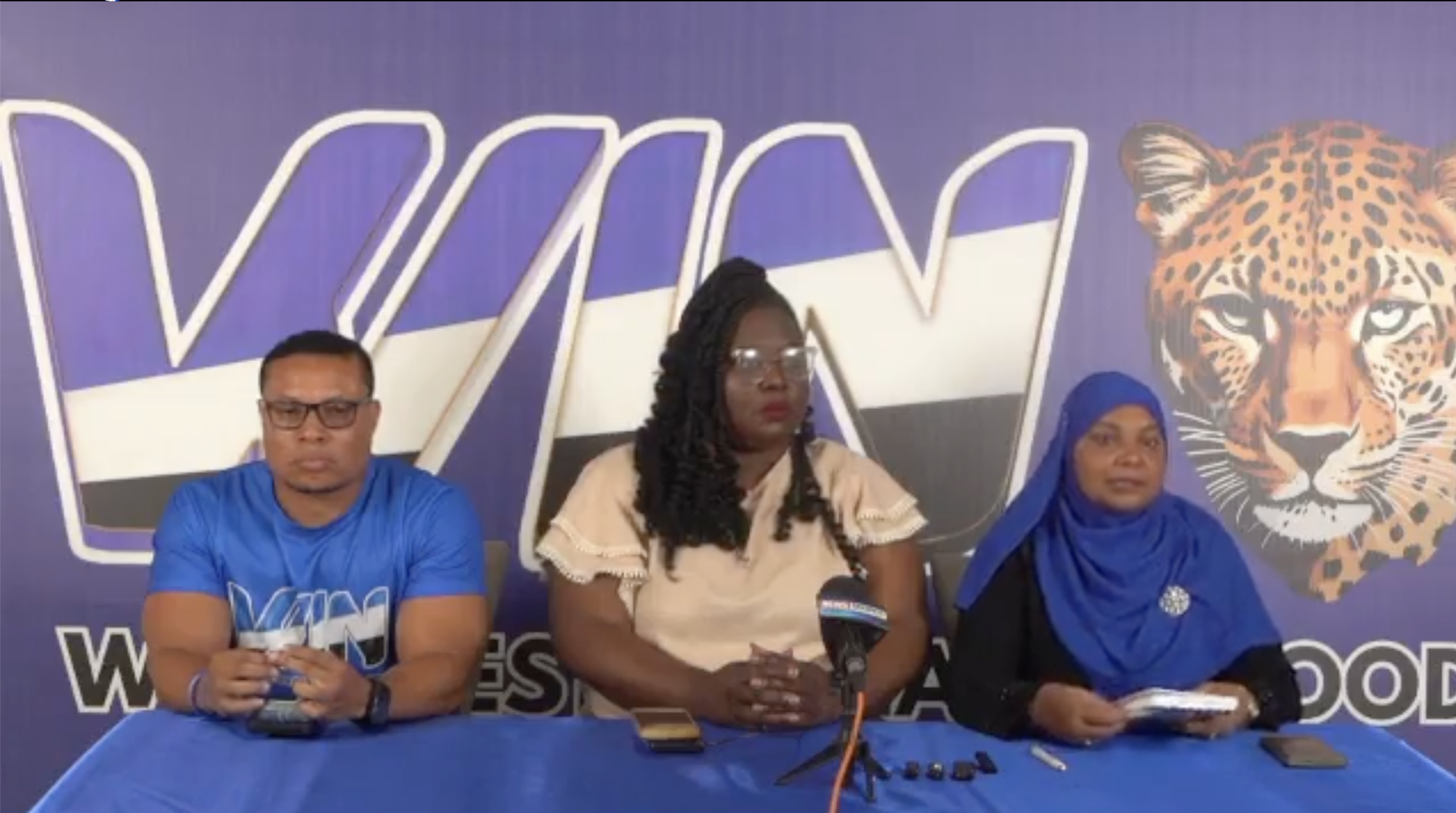
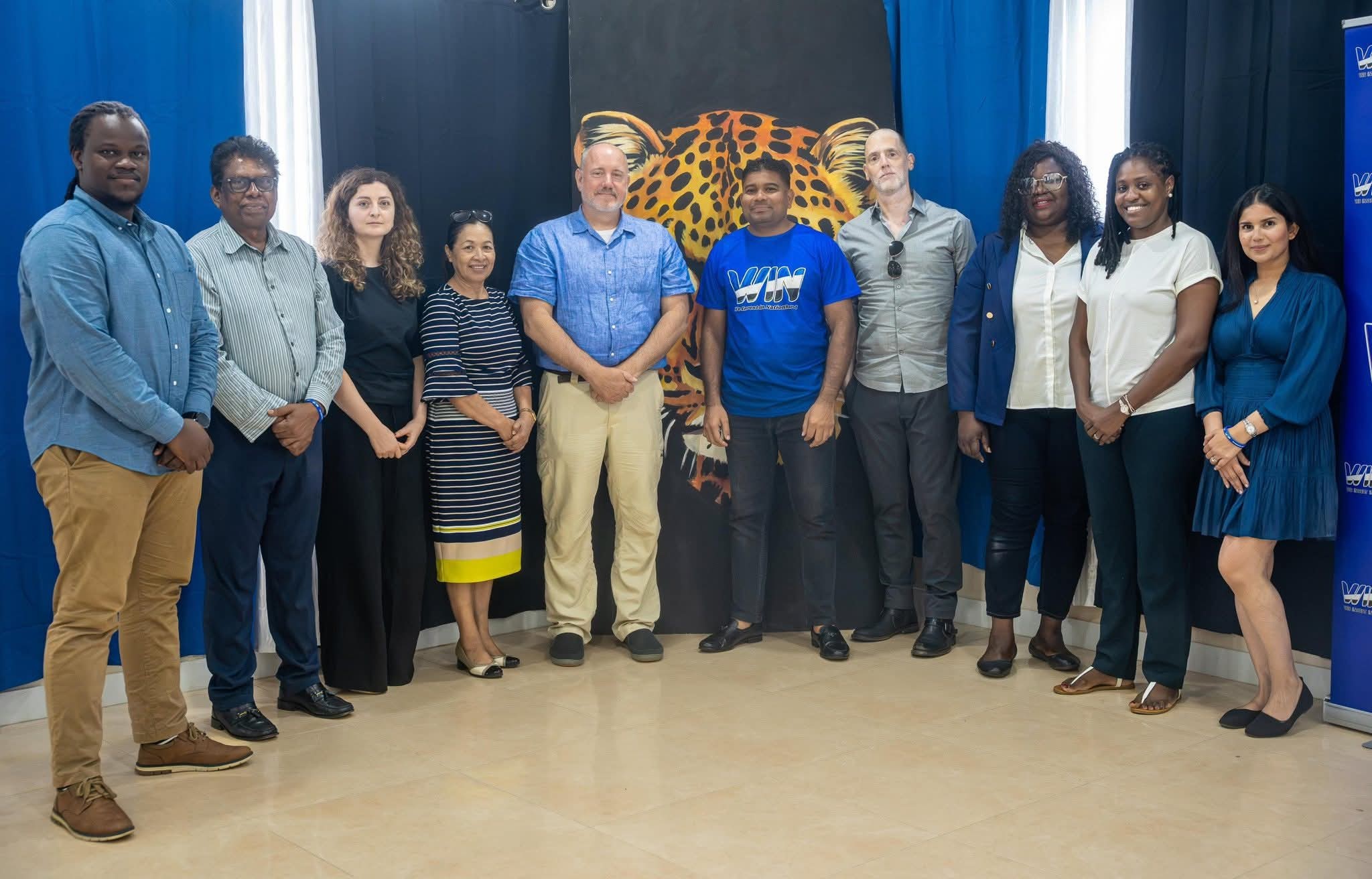
The next in consideration will have to be up and coming social media political candidate, Azzrudin Mohamed. Mohamed has been running a one-man campaign, heavily curated with regard to production values, embarrassingly light when it comes to actual policy. After boasting that he conducted polling that showed him winning an incredulous 65 percent of the vote, Mohamed vowed that he could beat all political parties alone and hence would not be coalescing with anyone, he weeks later signed in a clandestine coalition with the weakest small party in the running, ANUG under the leadership of Dr. Mark France. Mohamed’s social media rise as political campaign has had significant numbers of likes, and fair mobilisation on the ground. Buttressed by AFC associates like Charles Sugrim seconded to him and tons of his own money, he has been extremely popular, more than anywhere in the poor Afro community. His PM dilemma is manifold. The first hurdle is the OFAC sanctions against him, compounded by the civil and criminal tax evasion cases he is facing locally. He and his supporting circle have been at pains to downplay the consequences of political association with him but with little success. For example, they have sought to contort the American Ambassador’s stating that mere political support of a sanctioned person would not result in sanctions applied to the supporter – while true in terms of support, being part of the political machinery is an entirely different thing. Normal participation in politics at any significant level earns the participant designation as a Politically Exposed Person within the international financial system, whether in banking or simply remittance services. Senior association with an OFAC sanctionee would be worse. Were this not a hurdle in itself, the policy paucity and absence of basic informational integrity makes the Mohamed campaign unattractive to all but the politically and personally desperate, like France. The doctor himself comes with weight as a political candidate, with his history of forgery that he euphemises vaguely as ‘professional misconduct’ and an electoral record of three votes in his familial hometown of New Amsterdam. Even without that baggage however, France as strategic PM choice not only would be valueless in terms of his lack of electability or popularity in Amerindian community, but that to select him would be a signal to Mohamed’s significant Afro support that he sees no one from the community that he considers worthy of PM designation. His available pickings are slim, well, metaphorically. Most prominent is his ‘Campaign Manager’ Odessa Primus, the first and clearest casualty of the Mohamed association with her very public visa revocation. Logically next in line, considering the ANUG-WIN coalition, would be Dexter George, the only ANUG member outside of France and Jonathan Subrian, and who has even less political appeal and credential than France. After him would be former AFC member and Deputy Regional Chairman for Region Ten, Mark Goring, who like George you forget about ten minutes after you hear about them. Goring has notably been given pride of place in front of the increasingly obsequious France, particularly as Mohamed seems to focus strategically on Region 10.
Finally, there is the Forward Guyana Movement (FGM) led by former PNC member and former APNU+AFC Parliamentarian Amanza Walton. The FGM includes two even smaller parties, VPAC and Nigel London, whose party name is too irrelevant to remember. Three Afro-Guyanese principals within one coalition is not a recipe for diverse political appeal and Walton’s comments a few years ago about PPP supporters being intellectually lazy limits her capacity to reach the Indo demographic. So far, the only significant Indo supporter that she has in her corner is former PNC Treasurer and former APNU+AFC Minister, Ronald Bulkan, but who brings little value in terms of political appeal to the Indo demographic considering his association with the PNC and the disastrous Granger government.
We suspect that the only way out of the PM dilemma for the smaller parties is to take the Hughes deflection approach, the pretence that the focus is on the team and not on a ‘candidacy’ that is no constitutional requirement for participation in election.