
Insight Passport – Maruranau
Off the Beaten Path in South Rupununi – Laurel Sutherland

The Rupununi region of Guyana is well known for its breathtaking scenery — wide savannahs, rivers, and the famous Kanuku Mountains. But deep in the South, far from the usual travel routes, lies Maruranau Village, a Wapichan Indigenous community that few people ever think to visit.
I’d heard about Maruranau since I was a child. It’s one of six Wapichan villages scattered across the Deep South Rupununi in Region Nine. Still, it never crossed my mind to travel there — not until I met Perpetua Rebeiro, a woman from the community who I became acquainted with through work.
One of the few peculiar things about Maruranau is that it isn’t located near a river or creeks compared to other nearby villages. Having grown up near the Rupununi River, I could not imagine life without river adventures on a daily basis.
Over the phone, once, I teased Perpetua about her “riverless village” and she took it well, inviting me to visit the village’s very own waterfall.
I rolled my eyes at the invitation, thinking it might be a ploy to get me to visit her in the village but I decided to go anyway.
At the time, I was based in Karaudarnau, another Wapichan village, and I decided to make the trip with my nephew on motorbike. Since it was the rainy season, the road was rough and slippery. At times, I had to hop off and walk, letting my nephew navigate the worst of it. Thankfully, the rain stayed away. We left around 2:30 p.m. and reached Maruranau by 4.
Later that afternoon, the real adventure began.
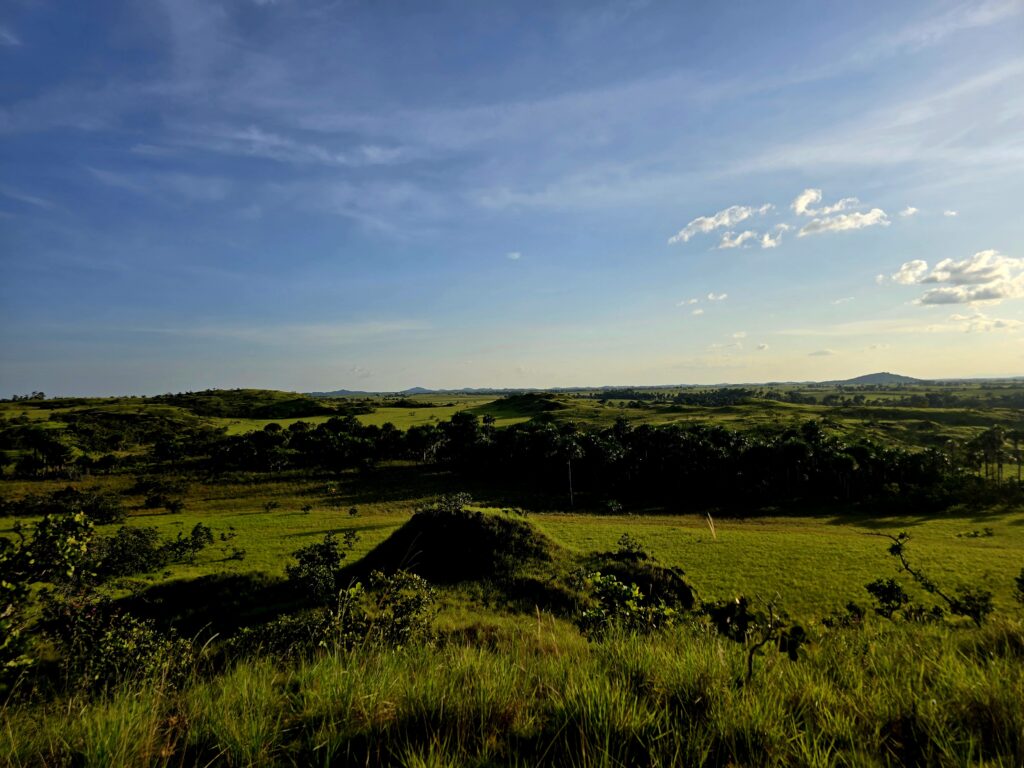
Around 5 p.m., I joined Perpetua, her husband Brian, and two of their friends — Myanna and Cloyd — for the trip to the falls. I imagined a long trek into the forest — maybe hours of walking through dense forest. Instead, six of us set off on motorbikes just as the sun began casting the savannah in its golden glow. At times, it felt like we were literally chasing the sun. We stopped occasionally to cross tricky patches on foot, but the scenery made every detour feel worth it.
Contrary to my forest expectations, we rode through open savannah, heading toward what felt like the middle of nowhere. The falls, they said, were only 15 minutes away — and they weren’t wrong, though my excitement made it feel even shorter.
What I saw when we arrived took me by surprise.
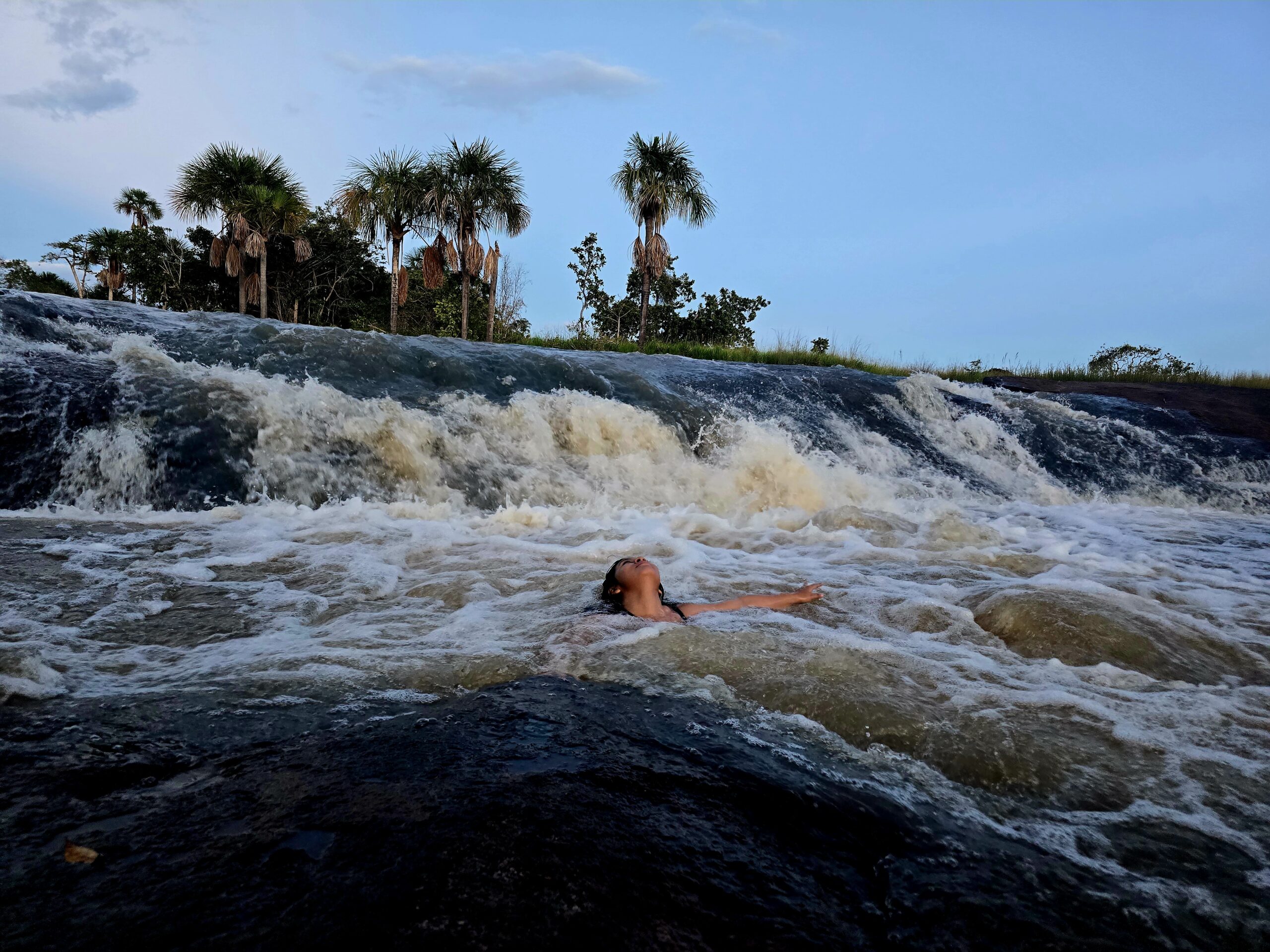
Set against the open plains was a modest but powerful waterfall, flowing steadily over smooth rocks into a pool framed by grass and sky. Not the dramatic jungle cascade I expected — but something raw, unspoiled, and even more magical for its quiet presence.
Brian checked in with me more than once: “You can swim, right?” he asked, warning that the current was stronger than it looked. I assured him I could. The others stayed near the calm edge of the pool, but as someone who never passes up a photo opportunity, I wanted to get closer.
I asked Perpetua to come with me. She agreed, and we moved toward the base of the falls. The current hit harder than I expected. For a brief moment, I panicked — the water pulling just hard enough to unsettle me. Thankfully, Perpetua was right there. She grabbed my hand and steadied me.
We laughed it off. It wasn’t a dramatic rescue, but it reminded me: nature doesn’t need to roar to be powerful.
The skies began to shift — golden hues fading into deep blue. We sat beneath the stars for a while, chatting and enjoying the cool air. That night, there was no need for insect repellent but it is recommended to have one on hand, especially during the rainy season.
Eventually, we returned to the village and made one last stop for the night — a hilltop shop called Pedigree Hill Heights. Usually, I’m shy around new people. But something about that night, the company, the music — it all felt right. We danced to soca and Brazilian forró, and I even got a chance to DJ. It was a perfect close to an unforgettable day.
The next morning began quietly and cloudy. Breakfast was fried bakes and boily beef, served with spicy peppers— a simple, hearty Rupununi meal that warmed me right up.
Later, we took a light tour around the hilly village, then headed to their man-made lake, another hidden gem in Maruranau. This time, the rain did catch us — light showers along the way, but nothing that could dampen our spirits. The lake was serene, almost the opposite of the roaring waterfall, but equally beautiful. We swam, laughed, and lost track of time between sun and rain.
The next day, my friend asked if I wanted to ride out to Shea, a neighbouring village. Of course, I said yes. I jumped on the bike behind her, and we made the short trip. Though we didn’t have time to explore, it was refreshing just to see another piece of the South and the famous Shea Rock, albeit from a distance.
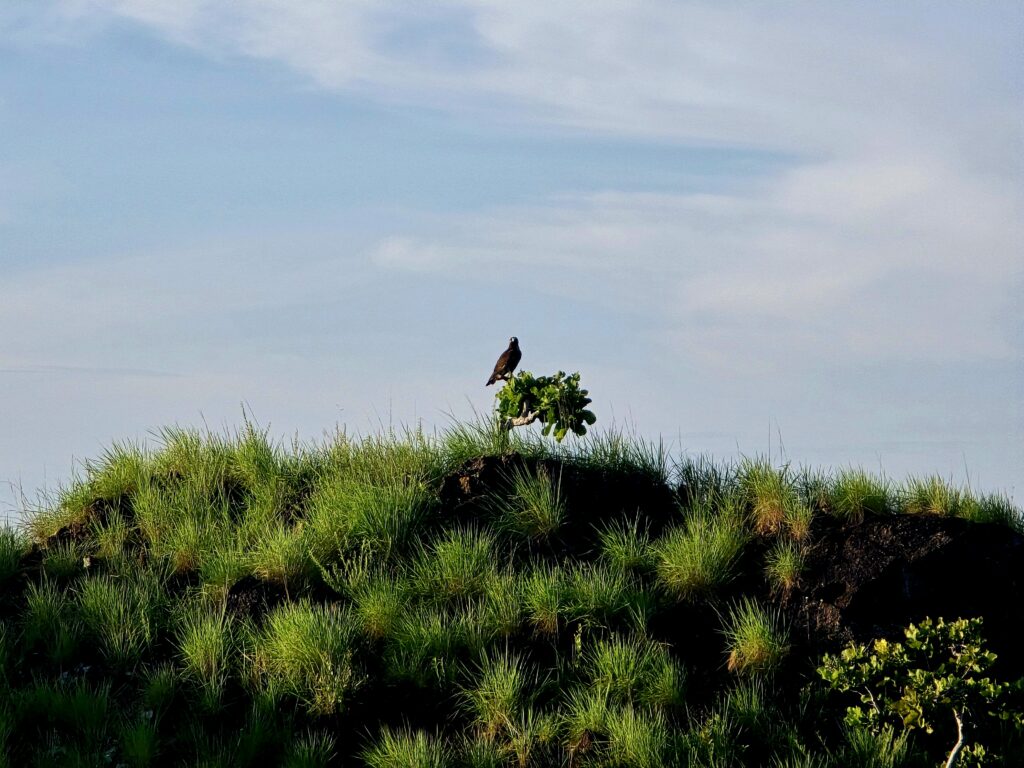
Back in Maruranau, Perpetua suggested a short hike to a scenic lookout called “The Chill Spot.” The name didn’t disappoint. From the hilltop, I saw birds I’d never seen before — even a solitary eagle staring straight at me like I had trespassed into its domain. I guess I had, but only to admire its view.
That same night, the village was preparing for Festa Junina, a Brazilian holiday adopted across many Rupununi communities. I had attended a version of it once in Georgetown, but what I saw in Maruranau was something else entirely.
By 6 p.m., villagers had already started burning a massive pile of logs, preparing the way for firewalking at midnight. In the meantime, Market Night unfolded. Food, drinks, and snacks lined makeshift stalls. Parakari, the local fermented cassava drink, was available for those who wished, Brazilian music pulsed through the village, with youths training for the upcoming August Games, and persons dressed in Festa Junina outfits dancing around the fire.
I wish I could say I made it to the firewalking, but exhaustion caught up with me — I fell asleep just before midnight. My friend’s brother, Daniel, later told me he walked across the coals himself, leaving with blistered feet as proof. Honestly, even if I had stayed up, I’m not sure I’d have had the courage. Maybe next time.
During my stay, I lived with Perpetua’s family. While Maruranau does have a guest house, it isn’t currently operating — but that didn’t matter. Their home was my home. Their son Brydon kept me company when everyone else was busy. Meals were thoughtful and plentiful — a mix of Indigenous and coastland flavours, all delicious. I’m not usually a big eater, but this time, I finished every plate and even gained a few pounds.
One of my favourite moments? Quiet mornings in the kitchen, sipping coffee, reading the news. Even miles from the city, I found calm.
When I first joked about Maruranau being a “riverless village,” I had no idea that behind the joke was a story waiting to unfold — of waterfalls in the hilly savannah, warm hearts in quiet homes, firewalkers under Brazilian music, and star-studded skies far from anything I’d imagined. Maruranau might not be on most people’s travel lists — but maybe that’s exactly why it should be.


The hinterland is so so beautiful…
Monkey Mountain is a must see!!!
I enjoyed this so much. I read it twice. <3 Now Can someone please take me to Maruranau ?